Is OpenBB or Perplexity Finance enough for professional equity research?
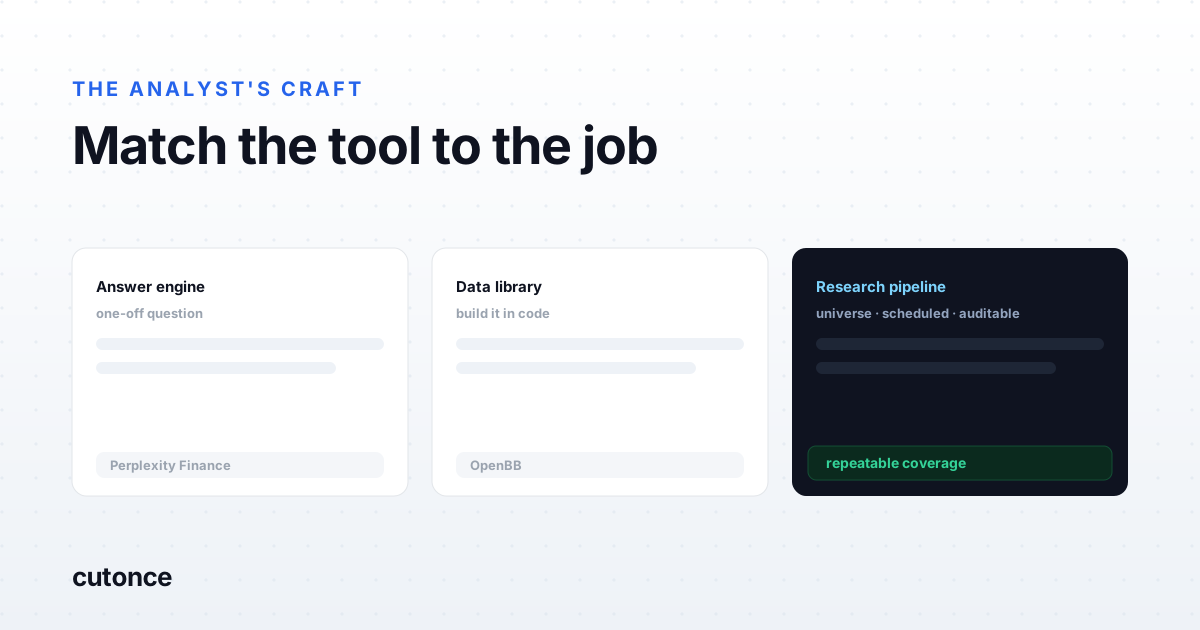
- OpenBB and Perplexity Finance solve different problems. OpenBB is an open-source, programmable data layer for people comfortable in Python; Perplexity Finance is a natural-language answer engine for quick, one-off questions.
- Both are genuinely useful within their lane. OpenBB is strong for assembling and querying data if you code; Perplexity is fast and convenient for a single lookup or a plain-language summary.
- The shared gap is repeatability at scale: neither is built to run a fixed thesis across a whole universe, on a schedule, and return the same reviewable output every time with the source attached.
- The honest test is the job. One-off question, use Perplexity. Building your own data stack in code, use OpenBB. A defined screen you rerun every week across hundreds of names with an audit trail is a pipeline, which is a different tool.
The question "can I just use OpenBB or Perplexity instead of paying for research tools" comes up constantly, and it usually gets a lazy answer in both directions - either "yes, they do everything now" or "no, real analysts need real tools." Both takes are wrong because they treat the two products as the same kind of thing. They are not. OpenBB and Perplexity Finance are good at genuinely different jobs, and the job most professional research actually is - running a defined thesis across a universe, repeatedly - is one neither of them is built for. Worth being precise about where each one wins.
What OpenBB is actually good at
OpenBB is an open-source financial platform that aggregates a large amount of data - fundamentals, prices, estimates, filings, and more - behind a consistent, largely programmable interface. For someone comfortable in Python, that is real value: you get broad data access without wiring up a dozen provider APIs yourself, and because it is open source you can see exactly where numbers come from, which matters to anyone who has been burned by an opaque data vendor.
Its strength is also its boundary. OpenBB gives you the components to build an analysis; it does not hand you a finished, scheduled workflow. If you want to run a fixed screen across a universe every week and have the results land in a reviewable place, you assemble that yourself in code on top of OpenBB. That is a fine trade for a quant who wants to build, and a real cost for an analyst who wants the answer without becoming a data engineer.
What Perplexity Finance is actually good at
Perplexity Finance is an answer engine with finance features: ask it about a ticker, a metric, or a recent event in plain language and it returns a fast, readable answer with citations. For a one-off question - what happened to this company's margins last quarter, what is the current consensus on that name - it is genuinely convenient, and the citations make it easier to verify than a chatbot that just asserts things.
But an answer engine is built to answer one question at a time. It is not built to run the same defined analysis across five hundred names and give you a comparable result for each, and its answers are not a reproducible artifact you can defend to a client or a compliance file - ask twice and the shape can differ. For exploration it is excellent. For a process, it is the wrong shape. The broader point about which model to trust for research reading is in which AI is best for equity research.
The job neither is built for
Most professional equity research, stripped down, is not a single brilliant question. It is the same disciplined analysis applied to a whole universe, over and over, every period: screen every name against the thesis, read the filings and calls the same way each time, rank what comes out, and be able to show your work. That job has three requirements that an answer engine and a data library both miss:
- Coverage at scale. The same analysis run identically across hundreds of names, not one lookup at a time.
- Repeatability. A saved thesis you rerun next week and next quarter without rebuilding it, so results are comparable across periods.
- An audit trail. A reviewable output with the source behind each result, so you can verify a claim and defend a decision.
That is a pipeline, and it is a different category of tool from either an answer engine or a data SDK. The same distinction is why the terminal question resolves the way it does: the reading-and-screening layer is where repeatable tooling earns its place, separate from raw data access.
Matching the tool to the job
| The job | The right tool |
|---|---|
| A quick, one-off question or summary | Perplexity Finance |
| Programmable data access, analysis built in code | OpenBB |
| A defined screen or analysis run across a universe, on a schedule, with reviewable output | A research pipeline |
These are not competitors so much as tools for different questions, and plenty of analysts use more than one. The mistake is trying to force a one-question answer engine or a code-first data library to do repeatable, auditable coverage work, then concluding that AI is not ready for research. The tool was just the wrong shape for the job.
Where Cutonce fits
Cutonce is the pipeline layer. You connect data sources - filings from EDGAR, earnings call transcripts, fundamentals, insider data - chain filter, scoring, and AI nodes to encode a thesis, and run it across your whole universe on a schedule, with results landing in a sheet, Slack, or email and the source kept next to each result. It does not replace a quick Perplexity lookup or a Python session in OpenBB; it does the part those are not built for, which is the repeatable coverage work. The concrete version of that - reading every call in a universe the same way each quarter - is walked through in analyzing earnings call transcripts at scale.
Note: this is not investment advice, and it is not a knock on either tool - both are good at what they are for. It is a framing for matching the tool to the job. Verify any tool against your own workflow and data requirements before relying on it.
Frequently asked
Is OpenBB good enough for professional equity research? For data access and ad-hoc analysis, if you are comfortable writing code, OpenBB is genuinely strong - it is an open-source platform that aggregates a lot of financial data behind a consistent interface and is transparent about its sources. Where it stops is automation you do not have to build: OpenBB gives you the components to assemble a workflow in Python, but running a fixed screen across a universe on a schedule, with reviewable output, is something you engineer yourself on top of it rather than something it does for you.
Can Perplexity Finance replace a research process? It can replace a lookup, not a process. Perplexity Finance is fast and convenient for a one-off question or a plain-language summary of a single name, and its citations make it easier to check than a black-box answer. But a research process needs to be repeatable, cover a whole universe uniformly, and produce an audit trail you can defend - and an answer engine is designed to answer one question at a time, not to run the same defined analysis across five hundred tickers every week and hand you the same-shaped result.
What is the difference between an answer engine and a research pipeline? An answer engine responds to a question you ask right now, optimizing for a good single answer. A research pipeline encodes a fixed thesis - specific data sources, filters, scoring, and analysis steps - and runs it identically across an entire universe on a schedule, returning a ranked, reviewable output with the source behind each result. The first is for exploration and one-off questions; the second is for coverage, comparability, and doing the same job every period without redoing the setup.
When should you use OpenBB, Perplexity, or a pipeline? Match the tool to the job. Use Perplexity Finance for a quick, one-off question or summary. Use OpenBB when you want programmable access to data and are happy to build the analysis in code. Use a research pipeline when the work is repeated - a defined screen or analysis you run across many names on a schedule and need to be able to review, compare period over period, and trust. Many analysts use more than one, because they are answering different questions.